Why today's trends matter for SEO and performance teams
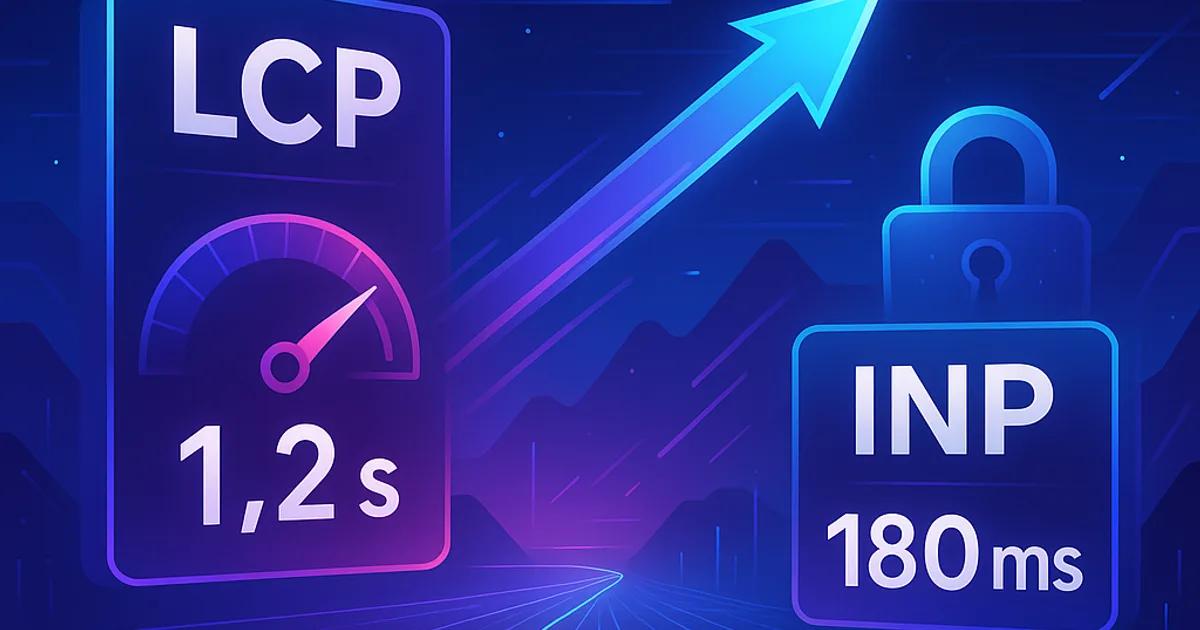
As we navigate 2026, staying ahead in ecommerce SEO and web performance requires a keen understanding of evolving Core Web Vitals and security practices. Insights from Google Trends highlight shifts that can influence your site’s performance and SEO strategy. From improving Largest Contentful Paint (LCP) to optimizing Interaction to Next Paint (INP), these trends are pivotal for maintaining competitive page experiences.
Enhancing LCP and INP for better user experience
Improving LCP, which measures the loading performance of the largest visible content element, remains a priority for many web teams. Techniques such as optimizing server response times and leveraging efficient resource loading are currently trending [1]. Concurrently, strategies for optimizing INP, a metric that evaluates the responsiveness of user interactions, are gaining traction. This includes minimizing main-thread work and optimizing JavaScript execution [5].
What this means for your stack: Prioritize optimizing LCP and INP to enhance user experience and align with Google’s performance benchmarks.
Image optimization with WebP and AVIF
Image formats like WebP and AVIF are becoming increasingly popular for their ability to reduce file sizes without sacrificing quality [2]. These formats are essential for improving LCP, as they enable faster loading of images, which are often the largest elements on a page.
What this means for your stack: Implement WebP and AVIF formats to optimize images and improve loading times, supporting better LCP scores.
Strengthening security with SSL and headers
Security remains a cornerstone of web performance, with best practices for SSL certificates and security headers trending in discussions [3][4]. Proper SSL implementation ensures encrypted connections, while security headers protect against various web vulnerabilities.
What this means for your stack: Regularly audit SSL configurations and implement robust security headers to safeguard your site and enhance user trust.
Page Experience signals and their SEO impact
Google's Page Experience signals, which include Core Web Vitals, are critical for SEO in 2026 [6]. These signals emphasize the importance of a seamless, fast, and secure browsing experience, directly impacting search rankings.
What this means for your stack: Continuously monitor and optimize for Page Experience signals to maintain and improve your site’s search visibility.
Sources
---
Authored by the ControlVitals Editorial Team — performance and SEO practitioners auditing real production sites every day.
Editorial transparency: this article was researched and drafted with AI assistance, then reviewed by our editorial team for factual accuracy before publication.